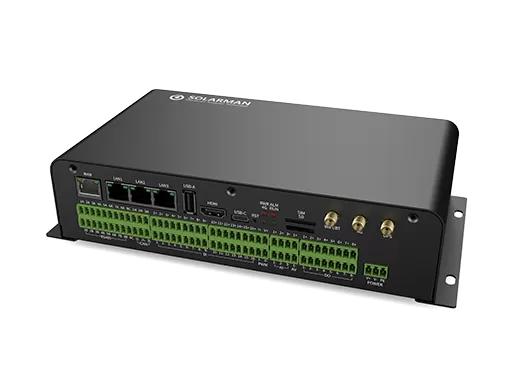
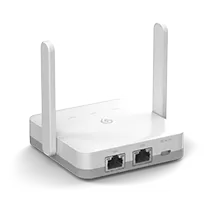
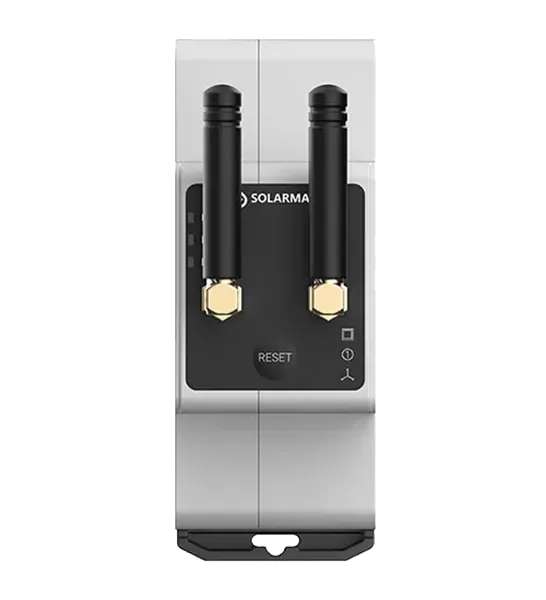
Communication interfaces determine how a smart gateway connects with devices, transfers data, and integrates with an energy monitoring system. In solar photovoltaic (PV) installations, selecting the right communication method can affect installation complexity, network reliability, data transmission, and compatibility with inverters, smart meters, and other energy equipment.
However, no single interface is ideal for every project. Wi-Fi and Ethernet provide network connectivity, Bluetooth is commonly used for local device communication, LoRa supports long-range, low-power wireless communication in suitable applications, and RS485 enables wired communication between compatible industrial devices.
This guide explains the main communication interfaces used in smart gateway applications and how to choose a suitable configuration for solar energy monitoring.
What Is a Smart Gateway and Why Do Communication Interfaces Matter?
A smart gateway connects compatible devices and enables data exchange between equipment, local networks, and monitoring platforms. Depending on its design, it may support protocol conversion, remote monitoring, local communication, and selected control functions.
In a solar energy system, a gateway may connect an inverter or smart meter to a monitoring platform, allowing users to access energy production, consumption, and equipment status information.
The available functions depend on the gateway model and the connected equipment. A gateway cannot automatically communicate with every device simply because both products support wireless or wired connectivity.
When evaluating IoT gateway devices, buyers should consider four important questions:
Which devices need to communicate?
Which interfaces and protocols do those devices support?
How far apart are the devices, and what is the installation environment?
Does the system require local monitoring, cloud connectivity, or both?
Answering these questions helps narrow down the appropriate gateway configuration before purchasing.
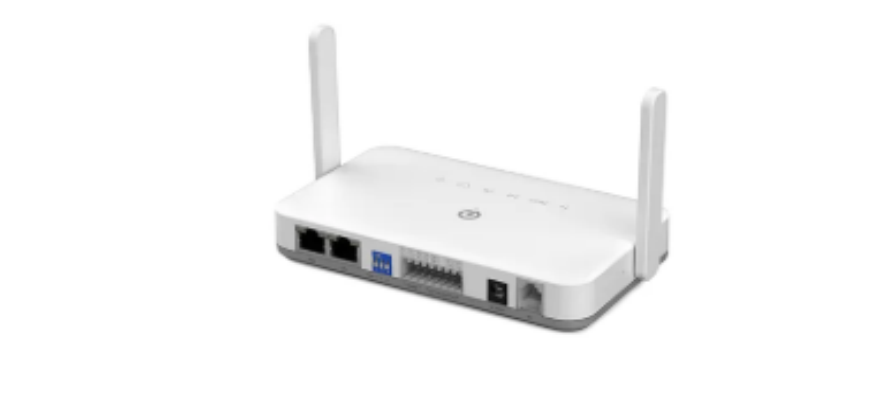
Wi-Fi and Ethernet: Network Connectivity for Energy Monitoring
Wi-Fi and Ethernet are commonly used to connect compatible gateways to local networks and internet-based monitoring platforms.
Wi-Fi Connectivity
Wi-Fi can simplify installation where suitable wireless network coverage is already available. It may be useful in residential solar installations where running additional network cables would be inconvenient.
However, Wi-Fi performance depends on signal strength, interference, network configuration, and the surrounding building structure. Metal enclosures, thick walls, and long distances can reduce signal quality.
Before selecting a Wi-Fi-enabled gateway, verify its supported frequency bands, network requirements, and compatibility with the site's router.
Ethernet Connectivity
Ethernet provides a wired network connection and can be appropriate for installations requiring predictable network connectivity.
Commercial buildings, energy management rooms, and industrial sites may prefer Ethernet where network cabling is available and permitted by the site's infrastructure.
Although Ethernet avoids some wireless interference issues, the installation still depends on cable quality, network configuration, and the availability of a suitable network connection.
For both options, confirm whether the gateway requires internet access for remote monitoring and which functions remain available if the connection is interrupted.
Bluetooth and LoRa: Different Wireless Communication Needs
Bluetooth and LoRa serve different purposes and should not be treated as interchangeable technologies.
Bluetooth for Local Device Communication
Bluetooth is commonly used for short-range wireless communication between compatible devices. Depending on the product, it may support initial configuration, local data access, or communication with nearby equipment.
Its suitability depends on the required range, supported Bluetooth version, surrounding environment, and the specific functions implemented by the device manufacturer.
Bluetooth should not automatically be assumed to provide the same network connectivity or remote monitoring capabilities as Wi-Fi or Ethernet.
LoRa for Long-Range, Low-Power Communication
LoRa is a wireless communication technology designed for long-range communication with relatively low power consumption. It may be useful in applications involving distributed sensors or devices that transmit small amounts of data over longer distances.
Actual range depends on obstacles, antenna placement, radio settings, local regulations, and the surrounding environment.
LoRa is also distinct from LoRaWAN, a networking protocol designed for LoRa-based devices. Supporting one does not automatically mean a gateway supports the other.
Before selecting a LoRa-enabled gateway, confirm that the gateway and connected devices use compatible radio configurations and communication protocols.
RS485: Wired Communication for Compatible Energy Devices
RS485 is widely used for wired serial communication in industrial and energy monitoring applications. It can support communication between compatible meters, inverters, controllers, and other equipment.
A typical installation uses a suitable twisted-pair cable and follows the manufacturer's wiring and network requirements.
When considering an RS485 IoT gateway, check the following:
Supported serial communication settings, including baud rate and parity.
Compatibility with the device's communication protocol, such as Modbus RTU where supported.
Wiring polarity and grounding requirements.
Network topology, termination, and permitted cable length.
The number of devices supported by the interface.
RS485 defines electrical signaling characteristics; it does not by itself guarantee that two devices understand the same data. Both devices must support compatible communication protocols and register mappings.
In a solar installation, for example, an RS485 connection may allow a compatible gateway to collect data from a smart meter or inverter. The exact connection method and supported parameters must be verified against the relevant product documentation.
How to Choose the Right Communication Interface for Your Project
The most suitable interface depends on the equipment, installation environment, and data requirements.
| Interface | Typical role | Main consideration |
|---|
| Wi-Fi | Wireless network connectivity | Coverage and interference |
| Ethernet | Wired network connectivity | Cabling and network availability |
| Bluetooth | Local device communication | Range and supported functions |
| LoRa | Long-range, low-power wireless communication | Radio compatibility and local conditions |
| RS485 | Wired communication between compatible devices | Wiring, protocol, and network configuration |
For residential solar installations, Wi-Fi may be convenient when network coverage is adequate. Commercial projects may benefit from Ethernet or RS485 where reliable wired connectivity is preferred.
Distributed monitoring applications may use LoRa where compatible equipment and the project architecture support it.
A communication gateway in IoT should therefore be selected according to its actual interface and protocol capabilities rather than the number of communication technologies mentioned in a product description.
What Should Buyers Check Before Purchasing a Smart Gateway?
Before placing an order, prepare a list of the devices that need to communicate and identify their supported interfaces.
Check the gateway's technical specifications, network requirements, communication protocols, compatible devices, installation conditions, and remote monitoring capabilities.
It is also important to distinguish between physical connectivity and application-level compatibility. Two devices may both support RS485, for example, but still be unable to exchange useful data if their communication protocols differ.
For solar installers and system integrators, confirming these details before installation can reduce configuration problems and avoid unnecessary hardware replacement.
Conclusion
Smart gateway communication interfaces serve different roles in solar energy monitoring. Wi-Fi and Ethernet provide network connectivity, Bluetooth supports suitable local communication tasks, LoRa enables long-range wireless communication in compatible applications, and RS485 connects devices using supported wired communication protocols.
The right choice depends on network availability, device compatibility, communication distance, data requirements, and installation conditions.
Before purchasing a gateway, verify its actual interfaces, protocols, and supported equipment. This approach helps ensure that the selected device can perform the intended monitoring and integration functions without unnecessary complexity.
FAQs
1. What communication interfaces can a smart gateway support?
Depending on the model, a gateway may support Wi-Fi, Ethernet, Bluetooth, RS485, cellular connectivity, or other interfaces. Not every gateway supports all these options, so check the product specifications.
2. What is the difference between RS485 and Ethernet?
RS485 is an electrical signaling standard commonly used for serial communication between compatible devices. Ethernet is a networking technology used to connect devices within network infrastructure. They serve different purposes and are not interchangeable.
3. Is Wi-Fi or Ethernet better for a solar monitoring gateway?
Wi-Fi may simplify installation where wireless coverage is reliable. Ethernet may be preferable where wired networking is available and predictable connectivity is important. The choice depends on the site and the gateway's capabilities.
4. Can an RS485 gateway connect to any smart meter?
No. The gateway and meter must have compatible electrical interfaces, wiring arrangements, communication settings, and protocols. The supported device list should be checked before installation.
5. What is the difference between LoRa and LoRaWAN?
LoRa refers to the radio modulation technology, while LoRaWAN is a networking protocol designed for LoRa-based communication. Device compatibility depends on the implementation and supported configuration.

 EN
 fr
 de
 es
 it
 nl
 pt
 cs
 pl