- Solutions
-
Products
Smart MeterMeter ReaderData LoggerSmart GatewayModule PV OptimizerWeather StationSmart Plug
- Support & Service
- Corporate
- News & Media

Smart meter is an advanced meter device that can monitor and record power usage in real time and transmit data to a centralized management system through communication technology. Compared with traditional mechanical or electronic meters, smart meters have higher accuracy and more functions, such as remote data reading, automatic fault detection and two-way communication.
1. Data acquisition: Smart meters monitor power consumption in real time through built-in sensors, including data such as voltage, current, power and energy consumption.
2. Data storage: The meter stores the collected data in internal storage media, such as memory or flash memory. Data is usually recorded in a regular cycle to ensure the integrity and accuracy of the information.
3. Data transmission: Smart meters transmit data to a centralized management system or energy supplier through communication technology (such as wireless networks, GPRS, ZigBee, etc.). Data transmission can be real-time or periodic.
4. Data analysis: The system receiving the data will analyze the power usage and generate reports, charts or alarms to help users understand the power usage or identify potential problems.
5. User feedback: Users can view power usage through a dedicated interface or application, perform energy management or adjust power usage strategies.
1 Real-time monitoring
Smart meters can monitor power consumption in real time and provide accurate power usage data. Users and energy suppliers can view power usage at any time, detect abnormalities or make adjustments in a timely manner.
2 Automated data collection and transmission
Smart meters automatically collect and transmit data, reducing the workload and errors of manual meter reading. Data transmission is usually wireless, which improves the efficiency and reliability of data transmission.
3 Accurate metering
Smart meters have high-precision metering capabilities and can accurately record power consumption, avoiding the metering errors that may occur in traditional meters.
4 Energy management and energy saving
Through the data provided by smart meters, users can better understand their power usage patterns, thereby optimizing energy use and reducing energy costs. Energy suppliers can also use this data for demand forecasting and load management to improve the efficiency of energy supply.
5 Fault detection and early warning
Smart meters can automatically detect abnormal conditions in the power system and generate alarms or notifications. This helps to promptly identify and solve problems in the power system and ensure the stability and reliability of power supply.
In short, as a key technology in modern energy management, smart meters play an important role in the energy field due to their high efficiency, intelligence and precision. With the continuous advancement of technology and the expansion of application scenarios, smart meters will play an increasingly important role in future energy management.
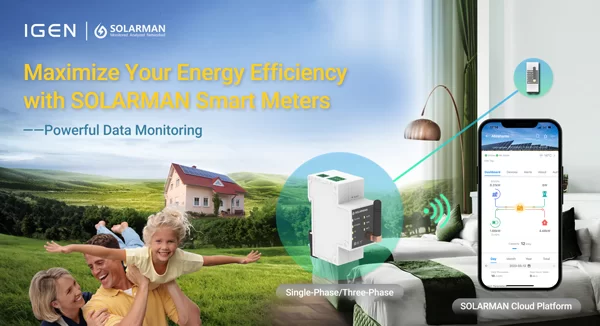
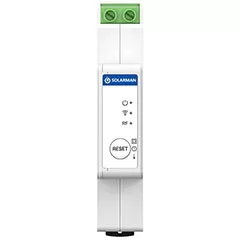
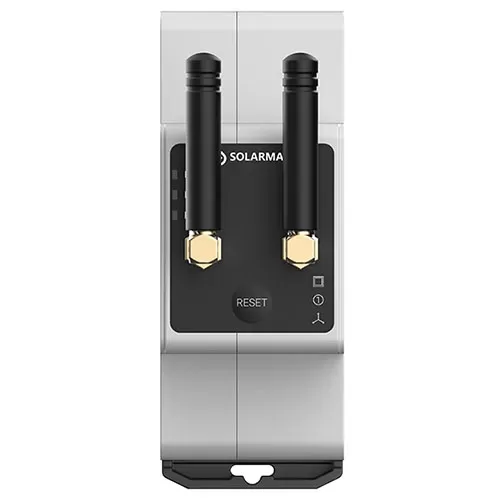
SOLARMAN smart meter is applied for energy management purpose, and it works to measure and control electricity consumption of apartment renting, household and industrial electricity, charging station, PV plant, intelligent building, chain stores, communication stations and etc,. It features in high reliability, high accuracy, compact size and easy to install, etc.

 Jan 27, 2026
  Dec 24, 2025
 EN
EN