- Solutions
-
Products
Smart MeterMeter ReaderData LoggerSmart GatewayModule PV OptimizerWeather StationSmart Plug
- Support & Service
- Corporate
- News & Media

Meteorological Weather Stations are an important part of modern meteorology. They play a key role in weather forecasting, climate research, environmental monitoring and other fields. With the development of science and technology, the functions of these weather stations are constantly improving, providing valuable information for scientific research and daily life.
Meteorological weather stations usually consist of multiple sensors and instruments that can measure and record a variety of meteorological parameters. These parameters include:
– Temperature: The temperature of the air is measured using a temperature sensor. This is essential for understanding the hot and cold conditions of the weather.
– Humidity: Humidity sensors measure the amount of water vapor in the air, which helps determine the probability of precipitation and dry and wet conditions.
– Air pressure: Air pressure sensors record changes in air pressure, which helps predict changes in weather systems.
– Wind speed and direction: Anemometers and wind vanes monitor the speed and direction of the wind and provide dynamic information about the wind.
– Precipitation: Rain gauges are used to measure the total amount of precipitation, helping to predict rainfall and understand precipitation trends.
– Radiation: Radiation sensors record the amount of solar radiation, which is of great significance for studying climate change and solar activity.
Meteorological weather stations not only provide real-time weather data, but also have the following functions:
– Weather forecast: By analyzing meteorological data, meteorological stations help meteorological experts make accurate weather forecasts and provide timely meteorological information.
– Climate research: Long-term data accumulation helps to study climate change trends and provide support for climate models.
– Environmental monitoring: Meteorological data can reflect air quality, pollution, etc., which is crucial for environmental protection and public health.
– Disaster warning: When extreme weather events (such as typhoons and heavy rains) occur, the data of meteorological stations can be used to issue warning information to help mitigate the impact of disasters.
In short, meteorological weather stations are constantly developing and improving as an important tool for weather monitoring and research. They not only provide basic data for weather forecasts, but also play an important role in many fields. With the advancement of technology and the improvement of data analysis capabilities, future meteorological weather stations will be more intelligent and precise, providing more powerful support for people’s lives and scientific research.
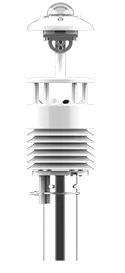
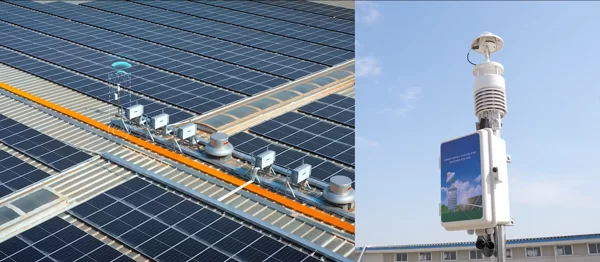
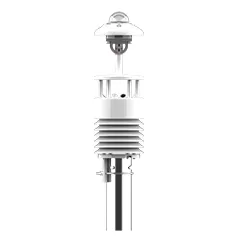
SOLARMAN meteorological weather station is specifically designed for PV system. It provides a comprehensive environmental monitoring solution for users including irradiance, ambient temperature and humidity, wind direction and speed, and module temperature. With the combination of accurate real-time data, durable products and powerful online platform, SOLARMAN helps users evaluate yield efficiency in a more comprehensive and convenient way.

 Jan 27, 2026
  Dec 24, 2025

 EN
EN