- Solutions
-
Products
Smart MeterMeter ReaderData LoggerSmart GatewayModule PV OptimizerWeather StationSmart Plug
- Support & Service
- Corporate
- News & Media

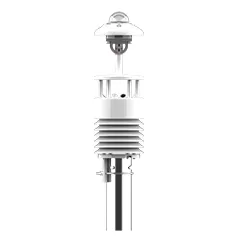
A meteorological weather station is a device used to monitor and record atmospheric conditions. It usually includes multiple sensors to measure meteorological parameters such as temperature, humidity, air pressure, wind speed, wind direction, precipitation, etc. By collecting and analyzing this data, meteorological weather stations are able to provide accurate weather information and provide basic data support for weather forecasting, climate research, and environmental monitoring.
Main functions of meteorological weather stations
1. Temperature monitoring: Meteorological weather stations are equipped with temperature sensors that can measure air temperature in real time. Temperature data is very important for weather forecasting and climate research, especially when monitoring extreme weather events.
2. Humidity measurement: Humidity sensors are able to measure the moisture content in the air. Relative humidity and absolute humidity data help predict precipitation, haze, and other humidity-related weather phenomena.
3. Air pressure measurement: Air pressure sensors are used to measure atmospheric pressure. Air pressure data is crucial for weather forecasting because changes in air pressure are often related to the movement and development of weather systems.
4. Wind speed and direction measurement: Wind speed and direction sensors provide wind speed and direction information. This data is essential for understanding the movement of weather systems, predicting storms, and planning shipping and aviation activities.
5.Precipitation recording: Precipitation sensors are used to measure precipitation, including rain, snow, hail, etc. Accurate precipitation data is of great significance to water resource management, agriculture, and disaster warning.
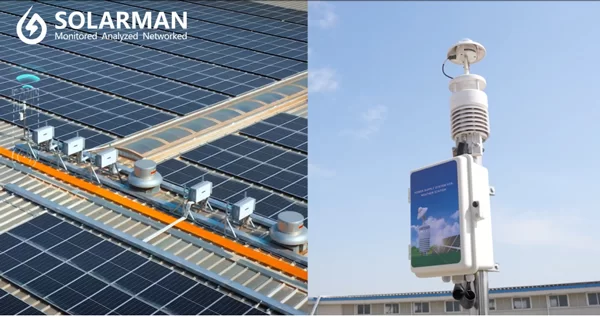
SOLARMAN weather station is designed for solar systems and can provide users with a complete environmental monitoring solution, including total solar radiation, atmospheric temperature and humidity, wind direction and speed, component temperature and etc. Through real-time and accurate data collection, combined with SOLARMAN platform, users can not only instantly grasp the operating environment of power plant, but also deeply analyze the power generation efficiency. Facing to Vietnam’s changeable weather conditions, SOLARMAN weather station can respond quickly and optimize system performance. It can help users evaluate the power generation efficiency of solar systems more comprehensively and conveniently.
For more information, pls reach to : https://www.solarmanpv.com/products/weather-station/

 Jan 27, 2026
  Dec 24, 2025

 EN
EN